
Why Some Black Bears Are Brown — What You Might See on a Wildlife Tour

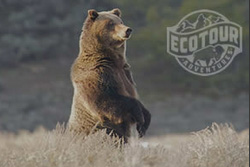
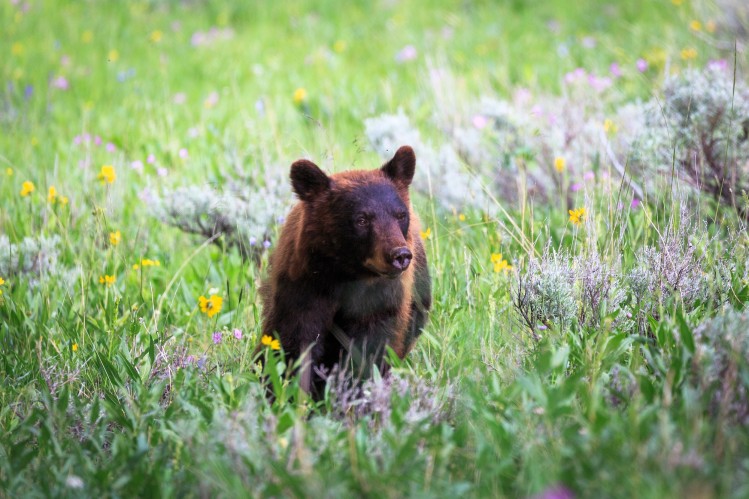
If you’ve ever spotted a cinnamon-colored bear and done a double take—wondering if you were looking at a grizzly—you’re not alone. It’s a common question: why are some black bears brown? Despite their name, American black bears (Ursus americanus) can come in a range of colors, including chocolate brown, cinnamon, blonde, and even blue-gray or white in rare cases.
It’s All in the Genetics
The color of a black bear’s fur is determined by genes—just like eye color in humans. The brown coloration results from a recessive gene variant that affects the production of melanin, the pigment responsible for fur color. Bears with two copies of this variant gene may have lighter-colored fur.
This color variation is most common in western North America, particularly in regions like the Rocky Mountains, the Sierra Nevada, and parts of the Southwest. In these areas, as many as 90% of “black” bears may actually be brown or cinnamon-colored.
Adaptive Advantages?
While scientists don’t know all the reasons this color variation persists, several hypotheses exist. One leading idea is that lighter-colored fur may offer a survival advantage in open, sunnier habitats. Brown bears may stay cooler under direct sunlight and blend in more easily with drier, tan-colored vegetation, giving them a camouflage advantage.
This theory aligns with where cinnamon-colored bears are most commonly found—more arid, open forests and mountainous regions, as opposed to the dense, darker forests of the eastern U.S., where nearly all black bears are indeed black.
Not to Be Confused with Grizzlies
It’s important to note that a brown-colored black bear is not the same as a brown bear, also known as a grizzly bear. Grizzlies are a different species—Ursus arctos—and are typically larger, have a prominent shoulder hump, and possess different facial and claw features. But when coloration is the only thing visible, it’s easy to confuse the two.
If you’re ever unsure, behavior, habitat, and physical traits like the profile of the face or the presence of a shoulder hump can help you tell them apart.
Nature Is Never Just Black and White
The next time you hear someone say, “I saw a brown bear in the woods!” you might gently ask: What kind of brown bear? Understanding that black bear is a species name, not a guarantee of color, opens the door to deeper appreciation of nature’s fascinating variability.
Whether black, brown, or even blonde, every bear plays a vital role in the ecosystems they inhabit. And no matter the color, giving these wild animals plenty of space and respect is always the best policy.
Want to test your bear ID skills? Head to the Wyoming Department of Fish & Game's dedicated webpage and see how well you know the difference between black bears and grizzly bears.