
Why the Geology of Grand Teton National Park Matters for Wildlife Viewing
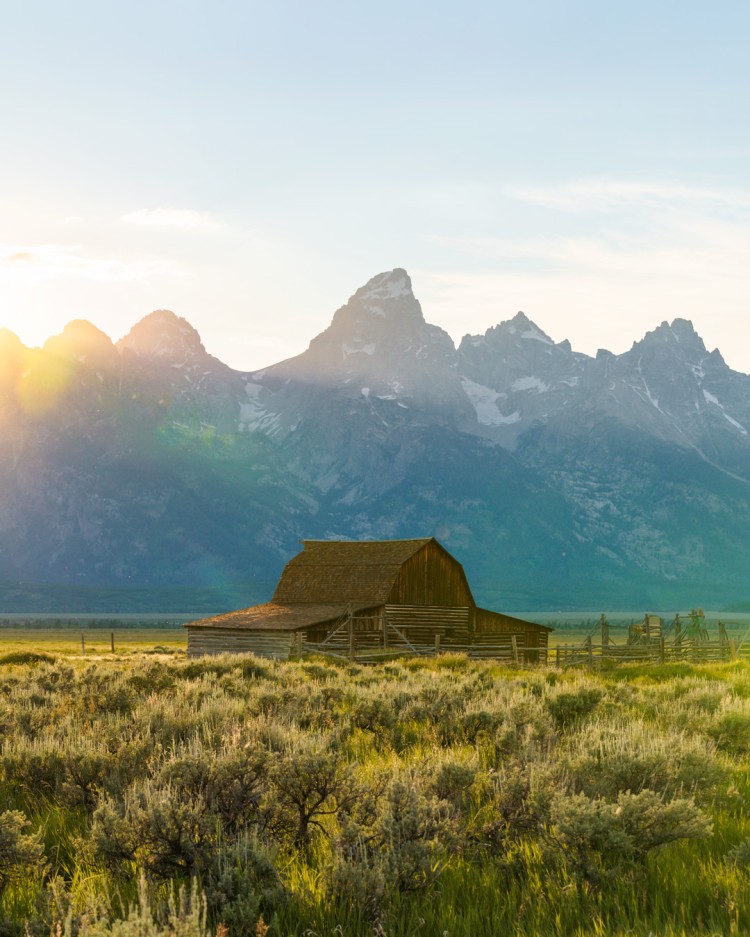
Grand Teton National Park is renowned for its jagged peaks, pristine lakes, and sweeping valleys, but its most extraordinary feature may be the story written in its rocks. Within the park, you can see some of the oldest rocks on the continent, a mountain range still rising before our eyes, and valleys carved by Ice Age glaciers. Few places on Earth showcase such a clear record of geologic time and process.
Ancient Foundations: Rocks Older than Life
At the core of the Teton Range lie Archean-age metamorphic and igneous rocks, formed between 2.5 and 3.4 billion years ago. To put that in perspective, these rocks were here long before plants or animals evolved.
- Gneiss makes up much of the high peaks. It formed deep underground when older rocks were subjected to intense heat and pressure, creating the light-and-dark banded patterns visible today.
- Granite intrusions came later, around 2.5 billion years ago, when molten magma forced its way into cracks in the gneiss and cooled slowly, creating crystalline rock.
These rocks, exposed by uplift and erosion, represent some of the earliest continental crust in North America. Standing on a Teton peak means standing on some of the oldest accessible rock on the continent.
The Birth of the Teton Range
Unlike most of the Rocky Mountains, which rose during the Laramide Orogeny 70–40 million years ago, the Tetons are geologically young. Their rise began only about 9 million years ago—the blink of an eye in geologic time.
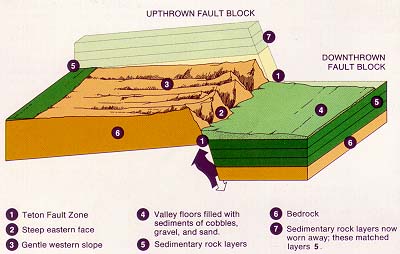
The driver is the Teton fault, a massive normal fault running north–south along the base of the mountains. Here’s how it works:
- The western block of crust (the Teton Range) is being lifted.
- The eastern block (Jackson Hole valley) is dropping down.
- Earthquakes along the fault accomplish this movement in fits and starts.
Over millions of years, this has produced more than 30,000 feet of vertical displacement—though erosion means we only see about 7,000 feet of relief today. The result is a mountain range that rises sharply, without the gradual foothills seen in many other ranges.
The Tetons are a classic example of a fault-block mountain range, like the Sierra Nevada of California, but even steeper and more dramatic.
Ice Age Architects: Glaciers at Work
If the Teton fault lifted the mountains skyward, glaciers gave them their iconic sharpness. During the Pleistocene Ice Ages (the last 2.5 million years), glaciers advanced and retreated multiple times across this landscape. Their movement reshaped the range:
- U-shaped valleys like Cascade Canyon were gouged by rivers of ice.
- Cirques, bowl-shaped amphitheaters at high elevations, mark where glaciers once began.
- Aretes and horns, such as the Grand Teton itself, formed as glaciers carved away ridges and peaks from multiple sides.
- Glacial lakes—Jenny, Leigh, String, Bradley, and Taggart—filled depressions left behind by retreating ice.
- Moraines, long ridges of rocky debris, stand as the remnants of glacial bulldozing.
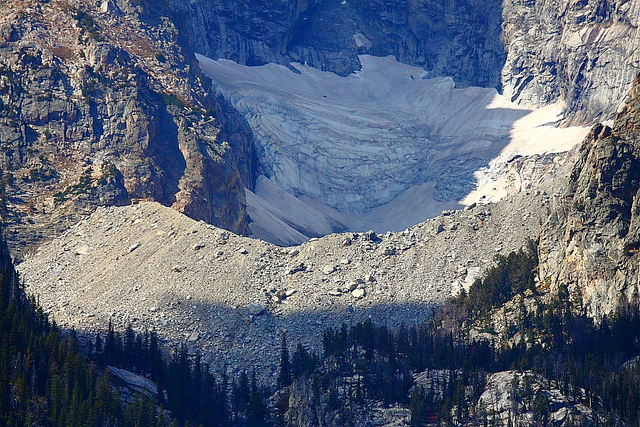
A glacial moraine.
Without glaciation, the Tetons might look more like a rounded plateau. Instead, they stand today as sharp, rugged spires—a landscape sculpted by ice.
A Landscape Still Alive
Although the Tetons appear timeless, geologic change is ongoing:
- The Teton fault is active. While no major earthquakes have been recorded in human history here, the fault is still moving. Future quakes could further uplift the mountains and deepen Jackson Hole.
- Erosion is relentless. Water, ice, and gravity work continuously to wear down the peaks. Landslides, rockfalls, and avalanches reshape slopes each year.
- Glacial remnants remain. A handful of small glaciers cling to north-facing cirques, like Teton Glacier beneath the Grand. Though shrinking in today’s warming climate, they continue to carve subtle changes into the high country.

In other words, the Tetons are still a work in progress.
Reading the Geologic Story
One of the joys of visiting Grand Teton National Park is learning to “read” the story in the landscape:
- Look at the flat valley floor of Jackson Hole—that’s the block that dropped down along the Teton fault.
- Notice the abrupt rise of the mountains without foothills—evidence of fault-block uplift.
- Trace the string of lakes at the mountain’s base—all carved and filled by glaciers.
- Study the banded rock of the peaks—gneiss that has survived billions of years of Earth’s transformations.

Each feature tells part of the story: ancient origins, ongoing uplift, and the sculpting power of ice.
Why Geology Matters Here
Geology is the foundation for everything we love about Grand Teton National Park. The rocks determine where plants grow, how animals migrate, and where people hike, climb, and camp. Without the faulting, there would be no dramatic skyline. Without the glaciers, there would be no jewel-like lakes.
To stand in Jackson Hole and look west at the Tetons is to see Earth’s processes frozen in action: billion-year-old rocks lifted by young faults, carved by ancient glaciers, and still shaped by the forces of today. It is one of the clearest, most dramatic windows into our planet’s dynamic history.