
The Creation of Yellowstone National Park: A Story Older Than the Park Itself
Before it became the world’s first national park, Yellowstone was already a place of deep history, culture, and meaning.
For thousands of years, Indigenous peoples lived in and traveled through what is now Yellowstone National Park. Archaeological evidence shows human presence in the region for at least 11,000 years. The steaming ground, erupting geysers, and mineral-rich hot springs that fascinated Euro-American explorers were well known to Native nations long before the park’s creation in 1872.
More than two dozen tribes have historical and cultural ties to Yellowstone, including the Shoshone, Crow Tribe, Blackfeet Nation, Bannock Tribe, Nez Perce Tribe, and the Eastern Shoshone Tribe, among others. To these communities, Yellowstone was a homeland, a travel corridor, a hunting ground, and a place of spiritual power.
Indigenous Presence in Yellowstone

"A family group photo, possibly taken by W.H. Jackson. Bannock elders reported this may be a photograph of Chief Tendoy, Chief of the Lemhi Shoshones. Tendoy Falls on Ferris Fork in the southwestern part of the park is named after him." / National Park Service
Indigenous peoples used Yellowstone’s landscape in ways that reflected deep ecological knowledge and seasonal movement. Tribes traveled through the region to hunt bison and elk, gather plants for food and medicine, and quarry obsidian—a volcanic glass used to make sharp tools and weapons.
One of the most important sources of this material was Obsidian Cliff. Obsidian from this site has been found at archaeological sites across North America, some thousands of miles away, showing that Yellowstone was connected to vast trade networks long before the arrival of Euro-American explorers.
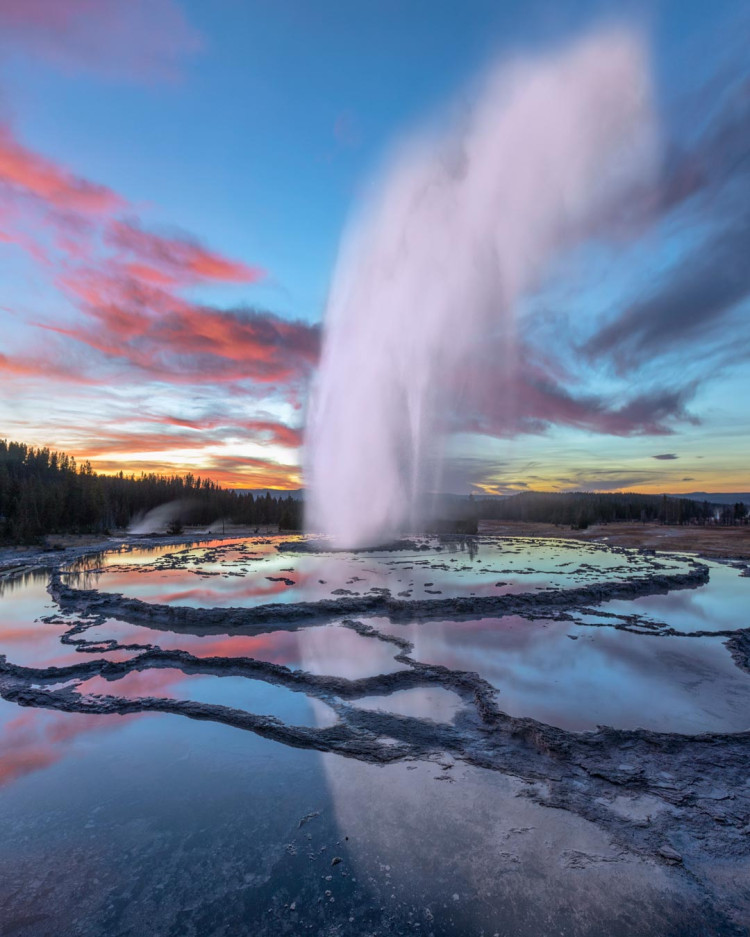
The region’s geothermal features also held cultural significance. Many tribes viewed hot springs and geysers as sacred places tied to stories about the earth’s power and creation. Oral histories describe the landscape not as strange or frightening—as early outsiders often portrayed it—but as a place woven into generations of knowledge and tradition.
Despite harsh winters, some groups—including the Tukudika, also known as the “Sheepeaters”—lived year-round in the Yellowstone region, hunting bighorn sheep in the surrounding mountains.
Exploration and the Myth of “Discovery”

William Henry Jackson / National Park Service
When fur trappers and mountain men passed through the Yellowstone region in the early 1800s, they began sharing stories of boiling rivers and erupting fountains of water. Many people dismissed these accounts as exaggerations.
Organized expeditions eventually confirmed the stories. One of the most famous was the Washburn-Langford-Doane Expedition of 1870, which explored much of the region and named many of its geothermal features, including Old Faithful.
But the expedition’s impact extended beyond exploration. Members of the group began promoting the idea that the region should be protected rather than settled or developed.
The following year, geologist Ferdinand V. Hayden led the Hayden Geological Survey of 1871, an expedition that would prove crucial in Yellowstone’s creation.
Hayden understood that convincing Congress required more than written reports. He brought photographer William Henry Jackson and artist Thomas Moran to document the landscape.
Jackson’s photographs offered the first visual proof of Yellowstone’s geysers and hot springs, while Moran’s sweeping paintings captured the scale and drama of the landscape. Their work helped persuade lawmakers that the region was truly extraordinary—and worth protecting.
The Birth of the National Park Idea
In the 19th century, most American land policy focused on settlement, mining, and development. The idea of preserving a vast landscape for its natural beauty and scientific value was revolutionary.
Supporters argued that Yellowstone’s geothermal features were fragile and unique. Without protection, they could be destroyed, privatized, or exploited.
On March 1, 1872, President Ulysses S. Grant signed the Yellowstone National Park Protection Act, establishing Yellowstone as the world’s first national park.
The land was set aside as “a public park or pleasuring-ground for the benefit and enjoyment of the people.”
The Complicated Legacy of the Park’s Creation

National Park Service / Thomas Moran
While the creation of Yellowstone marked a major milestone in conservation history, it also came with consequences for Indigenous communities.
The establishment of the park was based on the idea that the landscape should be preserved as a pristine wilderness. In practice, this often meant excluding the very people who had lived there for thousands of years. Many tribes were pushed out of the area or discouraged from continuing traditional hunting, travel, and cultural practices within park boundaries.
Today, the National Park Service works with affiliated tribes to acknowledge this history and incorporate Indigenous perspectives into Yellowstone’s interpretation and management.
A Global Conservation Model
The creation of Yellowstone changed the way people thought about land. The idea of setting aside landscapes for protection spread across the United States and around the world, inspiring national parks on every continent.
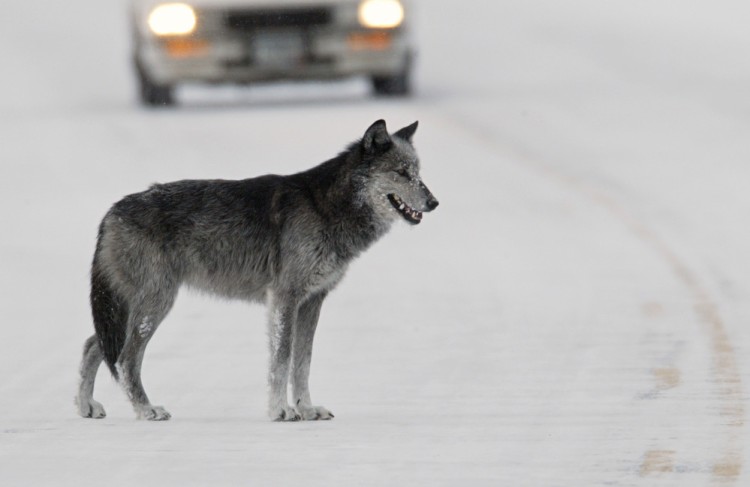
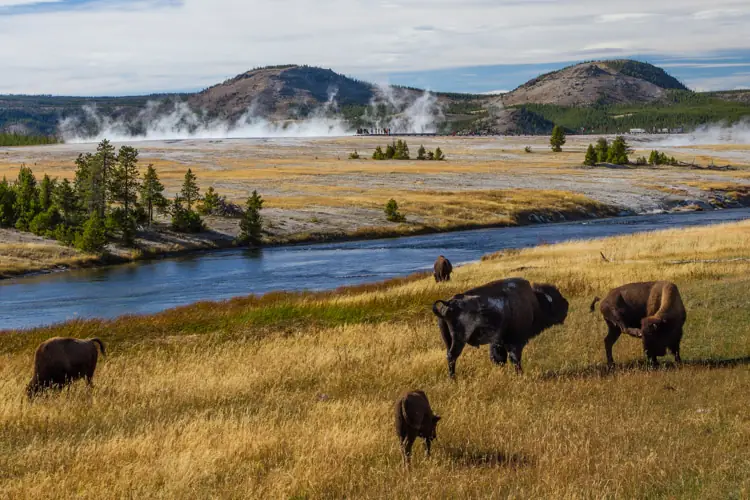
At more than 2.2 million acres, Yellowstone remains one of the largest intact ecosystems in North America. Together with surrounding lands, it forms the heart of the Greater Yellowstone Ecosystem—a region that supports wolves, grizzly bears, bison, elk, and hundreds of other species.
But Yellowstone’s story is more than a conservation milestone. It is also a reminder that the park’s history did not begin in 1872.
For thousands of years before Yellowstone was designated as a national park, it was already a place of immense importance to humans—one that will hold deep meaning for Indigenous nations for all of human history.