
Research Revealed: Ravens remember predator kill sites
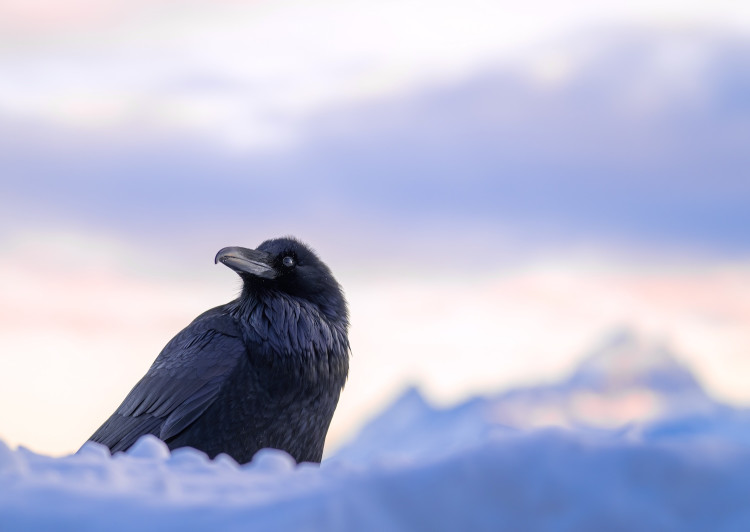
Cover image: ETA Naturalist Roy Cruz
For decades, a compelling image has shaped how we think about scavengers like ravens: they follow predators to access food, swooping in after a kill is made.
But a new study published in Science—“Ravens anticipate wolf kill sites across broad scales” (Loretto et al. 2026)—fundamentally reshapes that narrative. Drawing on more than two years of GPS tracking data across Yellowstone, researchers reveal a far more complex picture of how ravens survive in a world where access to food is unpredictable.
The takeaway is striking: ravens aren’t just following wolves—they’re thinking ahead of them.
The old assumption: follow the predator
Scavengers face a difficult ecological challenge. Carrion (a dead animal) is patchy, short-lived, and unpredictable. Traditional theory suggests that when resources are this uncertain, animals rely less on memory and more on immediate cues—following predators, watching competitors, or simply searching at random.
Ravens, in particular, have long been observed near wolves: flying overhead, responding to howls, even trailing tracks in the snow. These behaviors seemed to confirm the idea that ravens locate food by directly following large carnivores.
But until now, no one had tested whether this behavior actually holds up across large spatial and temporal scales. Researchers wanted to know: Do ravens actually follow predators to find food?
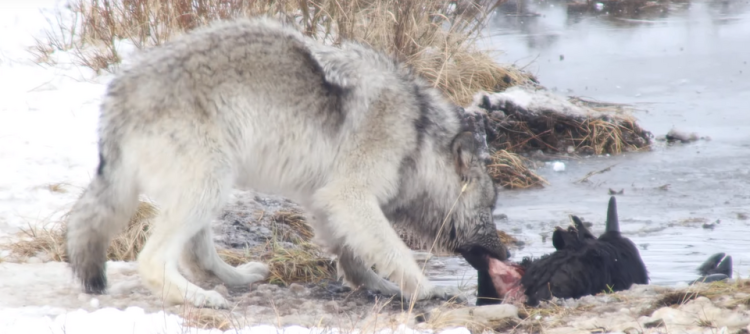
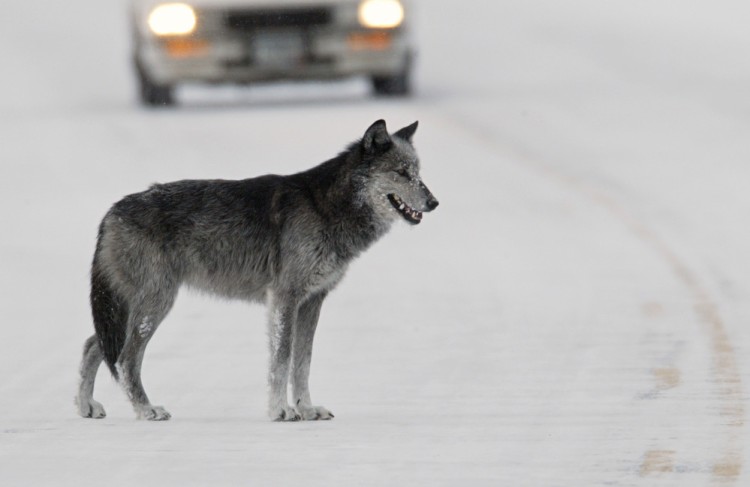
Photo: Hyungwon Kang courtesy of Wikimedia Commons
The study
To answer this question, researchers used GPS tracking over more than two years to follow the movements of ravens, wolves, and cougars across Yellowstone. The dataset was massive—hundreds of thousands of GPS locations, paired with confirmed kill sites from both wolves and cougars.
What they found challenges the dominant narrative:
Ravens rarely followed predators over long distances. In fact, across the entire study, researchers documented only one clear instance of a raven following a wolf over a meaningful distance—and even that event could also be interpreted as a targeted return to a known wolf territory. Additionally, there were no instances of ravens following cougars.
Instead, they returned to places where kills had happened before.
Some birds traveled over 90 miles (150 kilometers) to revisit these high-probability sites, and some individuals returned to these locations dozens of times.
The data showed that ravens were significantly more likely to visit areas with a higher density of past wolf kills, suggesting that they had learned—and remembered—where food was most likely to appear. Rather than trailing wolves in real time, ravens appear to rely on spatial memory—mentally mapping landscapes where food is likely to appear.
The new understanding: A cognitive map of food
Rather than chasing immediate signals, ravens appear to construct a kind of mental map:
- Areas with frequent wolf activity = higher chance of carrion
- Certain habitats (open valleys, near streams) = predictable hunting grounds
- Wolves = reliable food sources
- Cougars = less predictable, less rewarding
This map doesn’t tell them exactly where food is—but it tells them where food is likely to be. And, in a harsh landscape like Yellowstone, that’s enough.
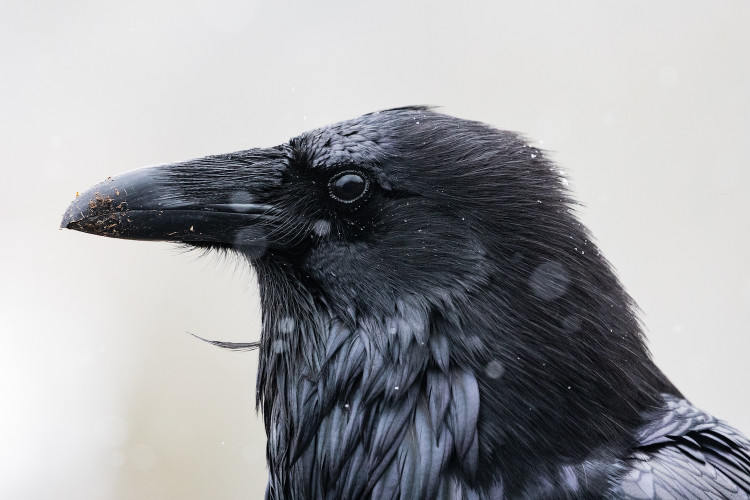
Photo: ETA Naturalist Rafael Sandoval
Wolves vs. cougars
Interestingly, the study found that ravens were far more likely to revisit wolf kill sites than those of cougars. Why?
Wolves tend to kill in more open, predictable areas and leave carcasses accessible to scavengers. Cougars, on the other hand, hunt in more concealed environments and often cache (hide) their prey.
From a raven’s perspective, wolves create a more predictable and accessible food system.
Why it matters
Understanding how animals like ravens find food helps us better grasp the complexity of ecosystems. It reveals that even species we might overlook are making strategic decisions across vast landscapes.
More broadly, it challenges a familiar assumption: that intelligence is rare, or confined to certain species. Instead, it suggests that adaptation often looks like cognition, especially when survival depends on it.