
The Best Times to Visit Grand Teton and Yellowstone National Parks
If you’re planning a trip to Grand Teton or Yellowstone National Park, one of the first questions you’ll likely ask is: When is the best time to visit?
The answer depends on what you want to see and do.
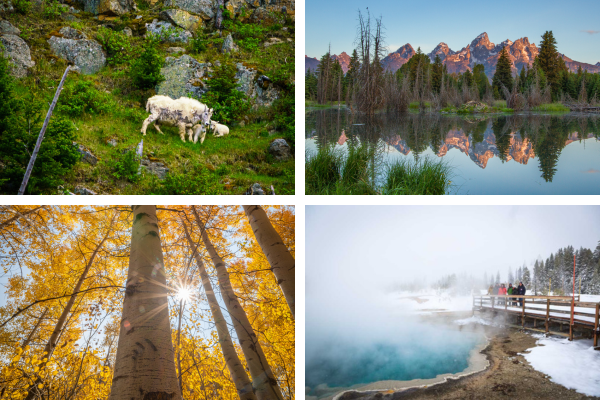
Summer brings the greatest access to trails, roads, and visitor services. Spring offers incredible wildlife viewing and wildflower blooms. In fall, the aspens turn golden and elk bugles echo across the valley. And winter transforms the Greater Yellowstone Ecosystem into a quiet, snow-covered world unlike anything you’ll experience during the warmer months.
Because Grand Teton and Yellowstone sit at high elevations and experience dramatic seasonal changes, timing your visit can make a big difference. Here’s what to expect throughout the year and how to choose the best season for your adventure.
Spring: Wildlife, Wildflowers, and New Beginnings
Best for: Wildlife viewing, newborn animals, fewer crowds
Spring arrives slowly in the Greater Yellowstone Ecosystem. Even as lower elevations begin to green up, snow can linger at higher elevations well into June and even July.
For wildlife enthusiasts, however, this transitional season is one of the most rewarding times to visit.
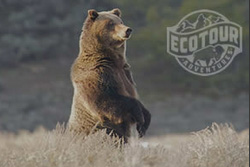
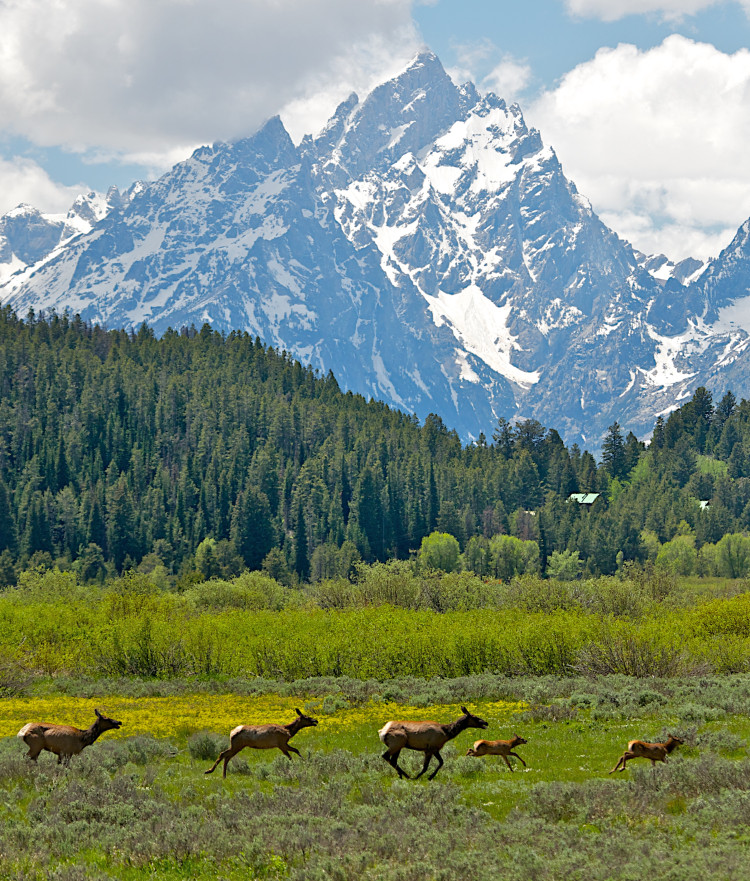
In Grand Teton National Park, migrating elk, pronghorn, and mule deer move through the valley as they return to their summer ranges, and bears awake from their winter hibernation and lumber through sagebrush flats. Wildlife is often visible along roadways and across the sagebrush flats, and the first wildflowers begin appearing as the snow retreats.
Spring is also the birthing season for these animals, so you’ll have the opportunity to watch calves and fawns learn the ways of the world.
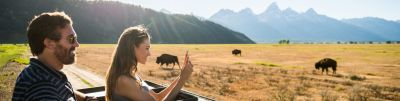
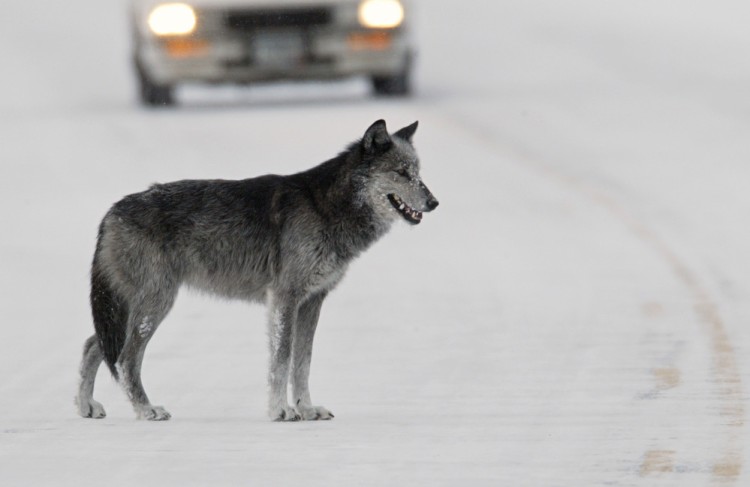
Yellowstone is equally compelling in spring. Bison calves begin appearing in the Lamar Valley, bears emerge from their dens, migratory birds return, and wolves remain active on the Northern Range. April and May can offer exceptional wildlife viewing, particularly for visitors willing to embrace unpredictable weather.
There is a tradeoff, though: spring is still shoulder season in both parks. Snowstorms are possible, some roads and facilities remain closed, and higher-elevation hiking trails may be inaccessible.
But if your priority is wildlife rather than hiking every trail or visiting every corner of the parks, spring can be an exceptional choice.
Why visit in spring?
- Excellent wildlife viewing
- Newborn animals
- Migratory birds returning
- Fewer visitors than during summer
- Emerging wildflowers and green landscapes
- A chance to experience the ecosystem coming back to life
Best months: April through early June, depending on weather and elevation.
Summer: The Classic National Park Experience
Best for: Hiking, sightseeing, first-time visitors, and maximum access
For many travelers, summer is the quintessential time to visit Grand Teton and Yellowstone.
By summer, most major roads are open, visitor services are operating, and hiking trails at lower and middle elevations become accessible. Grand Teton's most popular months are May through September, with the height of summer offering the greatest combination of access and services.
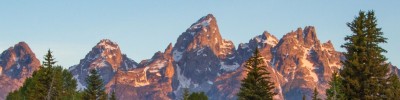
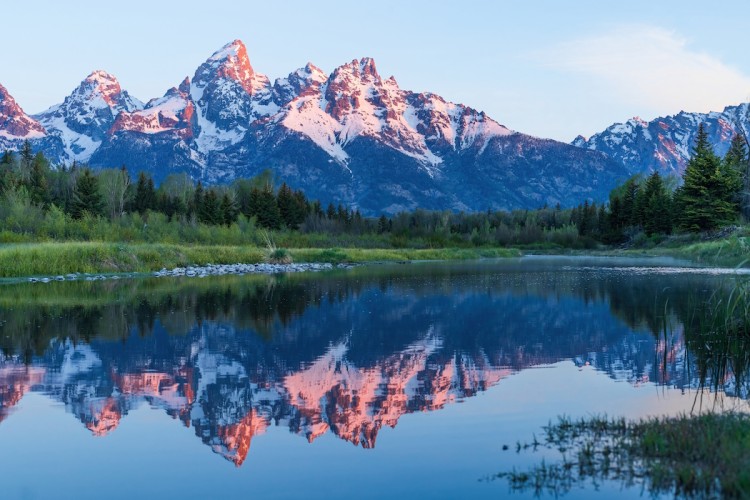
In Grand Teton, summer is ideal for hiking beneath the dramatic Teton Range, paddling on mountain lakes, photographing mountain vistas, and exploring the park's scenic roads. Wildlife remains abundant, particularly during the early morning and evening when temperatures are cooler and animals are most active.
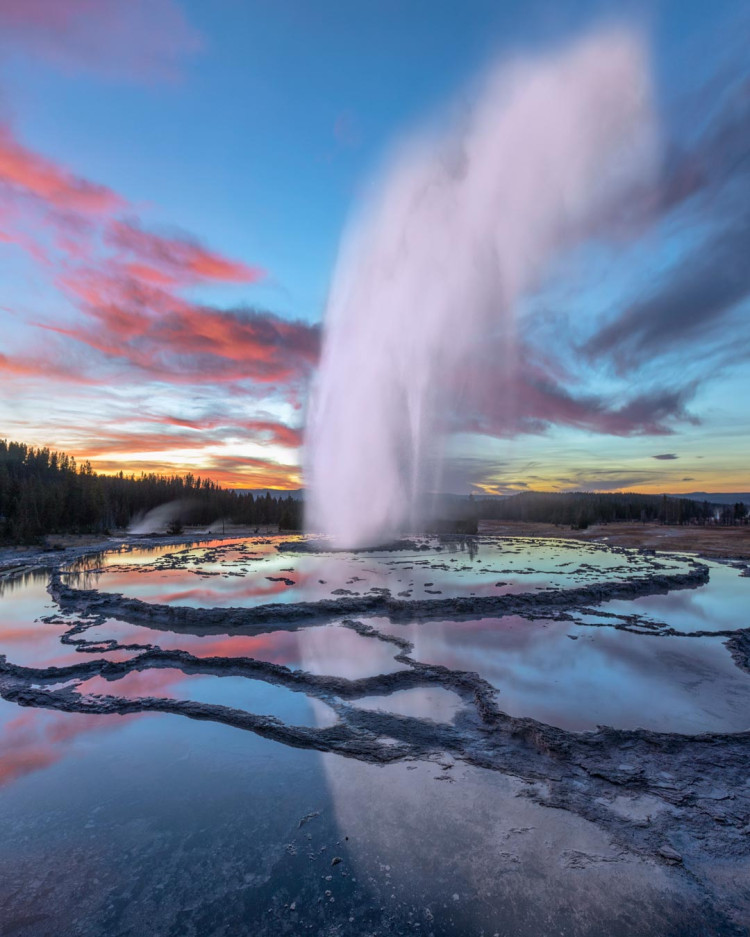
Yellowstone offers an almost overwhelming number of things to see during summer: geothermal features, waterfalls, alpine lakes, expansive valleys, wildlife, and hundreds of miles of trails.
It's also the easiest season for visitors who want to experience both parks in a single trip.
The downside? Everyone else knows summer is spectacular, too. Roads, trailheads, popular overlooks, and attractions can be busy, particularly from June through August. Early starts are a must if you want to secure a parking spot at popular trailheads. Wildlife viewing can also require more patience as animals disperse into higher-elevation summer habitat. Yellowstone's weather can be surprisingly unpredictable, too; even in summer, temperatures can drop quickly, and afternoon thunderstorms are common. Lastly, wildfire smoke can be quite prevalent at this time of year, but this depends entirely on where fires are located and where the wind is blowing the smoke.
Why visit in summer?
- Most roads and facilities are open
- Greatest access to hiking trails
- Warmest weather of the year
- Excellent opportunities for boating, hiking, camping, and sightseeing
- Long daylight hours
- Best season for combining Grand Teton and Yellowstone into one trip
- Best months: Late June through early September.
Pro tip: For the best wildlife viewing during summer, get out early. Sunrise isn't just beautiful in the Tetons, it’s often one of the most productive times of day to look for wildlife.
Fall: The Season for Wildlife and Color
Best for: Wildlife, photography, fall colors, cooler weather, and fewer crowds
If we had to choose one season for travelers who want an especially memorable combination of wildlife and scenery, fall would be near the top of the list.
As summer fades, the Greater Yellowstone Ecosystem begins its annual transformation.
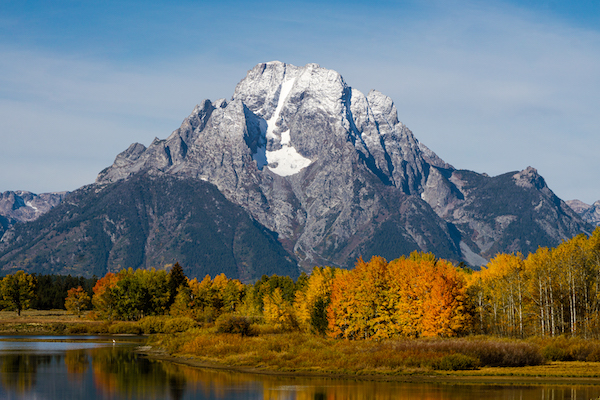
In Grand Teton, the aspen groves turn brilliant shades of yellow, the air becomes crisp, and wildlife activity increases. Bull elk begin bugling during the fall rut, and pronghorn begin their southward migration. Bears increase their activity as they enter hyperphagia – the season of extreme hunger during which they are eating nearly constantly to bulk up for winter hibernation. Elk, deer, and other animals are preparing for the long winter ahead.
Yellowstone experiences its own dramatic seasonal shift. September and October bring the elk rut, with bull elk bugling and competing for access to females. The Northern Range, Mammoth Hot Springs area, and Madison River region can be particularly productive places to look for elk during this period.
Fall also brings cooler temperatures and generally fewer visitors than the height of summer.
There is, however, a catch: fall weather can change quickly. Snow is possible, particularly at higher elevations, and some seasonal facilities and roads begin closing as winter approaches.
Still, for photographers, wildlife enthusiasts, and anyone who prefers a quieter national park experience, fall is hard to beat.
Why visit in fall?
- Spectacular golden aspen foliage
- Elk rut and bugling
- Excellent wildlife activity
- Cooler temperatures for hiking
- Fewer visitors than the peak summer season
- Beautiful conditions for photography
- A dramatic transition between summer and winter
- Best months: September through mid October.
Winter: A Completely Different Landscape
Best for: Snow-covered landscapes, solitude, and unique wildlife experiences
Winter is perhaps the most dramatic season in Yellowstone.
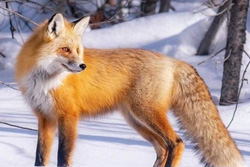
Snow blankets the landscape. Steam rises from geothermal features. Bison move through deep snow, their breath visible in the frigid air, while foxes and coyotes hunt across the white landscape. Yellowstone's winter ecology is remarkable, and the park takes on a sense of solitude that is nearly impossible to experience during summer.
Winter also provides unique wildlife-viewing opportunities. Animals concentrate in lower-elevation areas where food is more accessible, and the contrast of dark wildlife against a snowy landscape can make for exceptional photography.
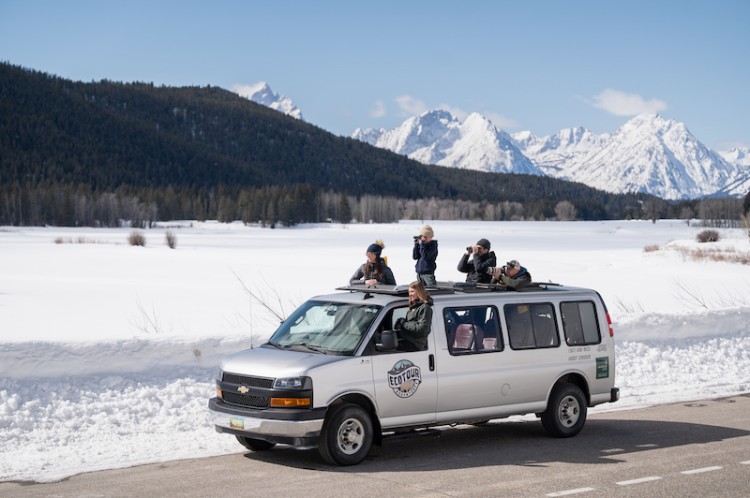
But visiting Yellowstone in winter requires significantly more planning. Most park roads are closed to regular automobiles during the winter season. The road between the North and Northeast entrances is generally the primary road open to regular vehicles, while many other areas can be accessed by commercially guided snowcoaches or snowmobiles.
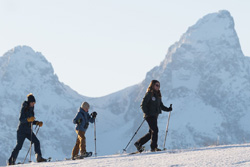
Grand Teton also becomes a winter wonderland, with snow-covered peaks and opportunities for cross-country skiing, snowshoeing, wildlife viewing, and winter recreation. Some roads close seasonally, while major travel routes through the valley remain accessible depending on conditions.
Winter isn't necessarily the easiest time to visit, but for adventurous travelers, it can be the most rewarding.
Why visit in winter?
- Exceptional solitude
- Snow-covered landscapes
- Unique wildlife viewing
- Incredible winter photography
- Cross-country skiing and snowshoeing
- Yellowstone's geothermal features become especially dramatic against the snow
Best months: January through early March for a true winter experience.
So, When Should You Visit?
There really is no wrong season to visit Grand Teton or Yellowstone. The better question is: What do you want your trip to be about?
| If you want… | Consider visiting… |
| Newborn wildlife and fewer crowds | Spring |
| Hiking and maximum park access | Summer |
| Fall colors and the elk rut | Fall |
| Snowy landscapes and solitude | Winter |
| The best all-around first-time experience | Summer or early fall |
| Exceptional wildlife viewing | Spring or fall |
| Photography | Fall or winter |
| Fewer visitors | Spring, falll, or winter |
The Best Time to Visit? It Depends on You.
The Greater Yellowstone Ecosystem is constantly changing. A landscape that looks completely different in July can be unrecognizable beneath several feet of snow in January. Elk that spend their summers high in the mountains gather at lower elevations in fall. Pronghorn migrate across ancient routes. Bears emerge from their dens in spring. Wildflowers bloom, aspens turn gold, and eventually the first snow returns.
That's part of what makes these parks so special. Each season is vastly different.
If you're able to visit more than once, consider choosing a different season each time. And if this is your first trip, think beyond the question of when is the best time to visit? Instead, ask yourself what do I most want to experience?
Whether that means watching a bull elk bugle across a misty September morning, spotting a bear emerging from its den in spring, hiking beneath the Tetons on a warm summer day, or watching a bison disappear into a Yellowstone snowstorm, there's a season waiting for you.
Planning Your Trip
Whenever you visit, remember that weather and road conditions can change quickly in both parks. Yellowstone's high elevation means snow can occur even during spring and fall, while summer thunderstorms and sudden temperature changes are common. Always check current conditions, road status, and seasonal operating information before your trip.
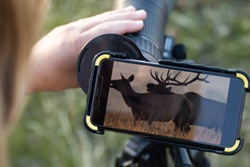
And when wildlife viewing, give animals plenty of space and use binoculars or a spotting scope rather than approaching them. The safest wildlife encounters are the ones that allow animals to behave naturally – and leave you with an unforgettable story to take home.
See the Wild Side of the Greater Yellowstone Ecosystem
No matter when you visit, there’s always something wild to discover in the Greater Yellowstone Ecosystem. From spring’s newborn animals to fall’s spectacular elk rut, our naturalist guides know where to look – and, just as importantly, how to give wildlife the space they need to thrive.
Join Jackson Hole EcoTour Adventures for a wildlife or geology tour and experience the park through the eyes of knowledgeable local guides. We’ll help you find the wildlife, understand the landscapes they call home, and make the most of your time in one of North America’s most incredible ecosystems.
Ready to explore? Book your wildlife adventure, either spring/summer/fall or winter, with Jackson Hole EcoTour Adventures today.